|
| St Michael's the Archangel Greek Catholic Church |
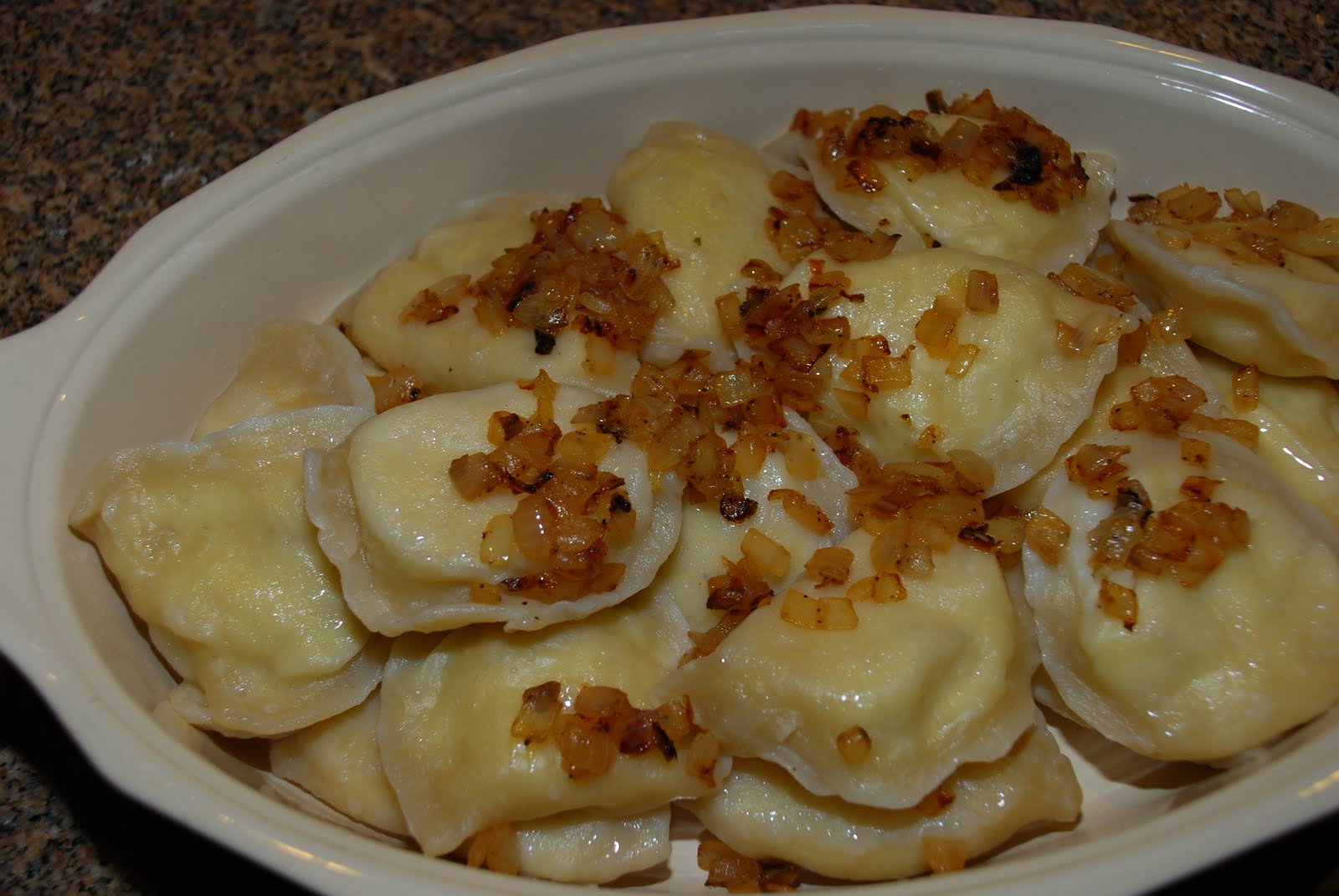
Pierogi... the word conjures up memories of Baltimore and St Michael The Archangel Greek (Ukrainian) Catholic church. Mom and then myself, also used to get them from Holy Rosary Church. There were many churches in Baltimore which sold pierogi made by the church ladies, but St Michael's is the one I remember best.
Pierogi, while commonly believed to be Polish, is found in all the eastern European cultures. Sometimes, they have a different name, such as perogi, perogy, pirohi, piroghi, pirogi, pirogen, pierogy, pirohy, pyrohy, etc. Funny thing is that the Proto-Slavic root word, "pir" means festivity. In other languages, it became "pie". In my parents & grandparents homes, they were traditionally served on festive religious holidays: Christmas, Easter, Feast of the Three Kings, etc.
So, what are pierogi? They are delicate dumplings that use unleavened dough (a dough made without yeast) and they are stuffed with fillings such as mashed potatoes, farmer’s cheese, sauerkraut, cabbage, mushrooms, spinach, ground beef, sausage, and fruit. You can find varieties from sweet to salty to spicy. The only limitation to pierogi stuffings is your imagination.
 |
| pierogi dough |
The hardest part about making these little darlings is the dough. My latest adventure into dough has had mixed results. If I roll the dough thin, it doesn't remain pinched together. If I roll it thicker, then I don't get the results I want. Sigh...

Anyway, the dough I'm trying today is:
2 cups sour cream
3 eggs
4 cups flour
2 tsp salt
2 tbs melted butter
2 tbs oil

I'm mixing all the ingredients together to form a soft dough. After mixing and getting a smooth dough, divide it into a couple of pieces and roll it thin. Cut circles with a glass. If the dough is too thick, roll each circle of dough to the desired thickness.
When you have your dough circles, fill them with the desired filling.

Today, I'm using leftover sauteed sauerkraut & onion. I'm also slightly moistening the edges of the dough to, hopefully, get a better seal.
The finished dumpling needs to be set aside to dry. They can be frozen. Just put them in the freezer, unwrapped, and, when frozen, take out and put into ziploc bags for freezer storage.
To prepare for eating, boil in hot, simmering water until the dough is cooked through, about 10-15 minutes. When thoroughly cooked, remove from the water and drain.
While they are draining, melt butter in a skillet and then fry the pierogi in the butter until they get a bit of a crust on them. Plate them hot with or without toppings.
A traditional topping is minced fried onion, bacon bits, and melted butter. Cook the bacon until crisp, remove from the pan. Cook minced onion in the pan drippings with some butter melted in there too. When onion is browned, add the bacon back to the pan to reheat and then top the pierogi with the hot bacon & onion mixture for serving.
Other toppings include sour cream and applesauce.
 A quick and easy recipe that I got from my sister-in-law, who was born & raised on Puerto Rico. It is modified a smidgeon, but not much. This is a good way to stretch one's dollars and still have a filling & nutritious meal.